
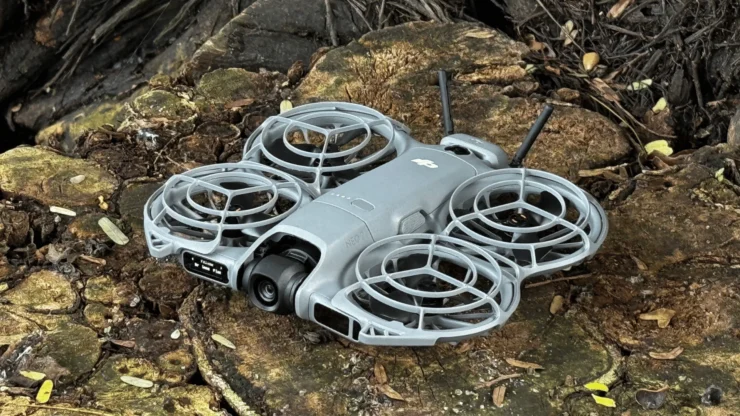
When the first DJI Neo arrived last year, it instantly became a hit. It was the most affordable DJI drone ever released, and because it was easy to fly and priced very well, it quickly sold out. It became the ideal starter drone since you could learn to fly without worrying too much about breaking something expensive.
Now, DJI is back with the new DJI Neo 2. Many users are asking what improvements it brings and whether it is worth upgrading from the original DJI Neo. Here is the full review to help you decide.
Table of Contents
DJI Neo 2 Specifications
| Weight | 151 g |
| Max Video Resolution | 4K/60fps, 4K/100fps Slow Motion |
| Gimbal | 2-axis |
| Tracking Feature | FocusTrack: ActiveTrack (with Cycling option), Spotlight, Point of Interest |
| Intelligent Features | SelfieShot, Dolly Zoom, MasterShots, QuickShots |
| Gesture Control | Supported |
| Return to Palm | Supported |
| Omnidirectional Obstacle Sensing | Supported |
| Max Flight Time | 19 mins |
| Max Video Transmission Range | Wi-Fi: 500 m, O4: 10 km |
| Max Tracking Speed | 12 m/s |
| Internal Storage | 49 GB |
The Unboxing
The unit we tested is the Fly More Combo. Inside the box, you will find the DJI Neo 2 with the Digital Transceiver already attached, along with 3 Intelligent Flight Batteries, a Two-Way Charging Hub, spare propellers, spare screws, a screwdriver, a USB-C to USB-C data cable, and the DJI RC N3 Remote Controller. The controller comes with a USB-C cable but you can replace it with a Lightning connector if needed.
There are several other versions available in the market such as the standard drone only package, a package that includes an extra battery and charger and a Motion 3 plus N3 bundle if you want to fly it like an FPV drone.
The Fly More Combo does not include a carrying bag. This is something you will need to purchase separately if you want easier and safer transport.
The Design
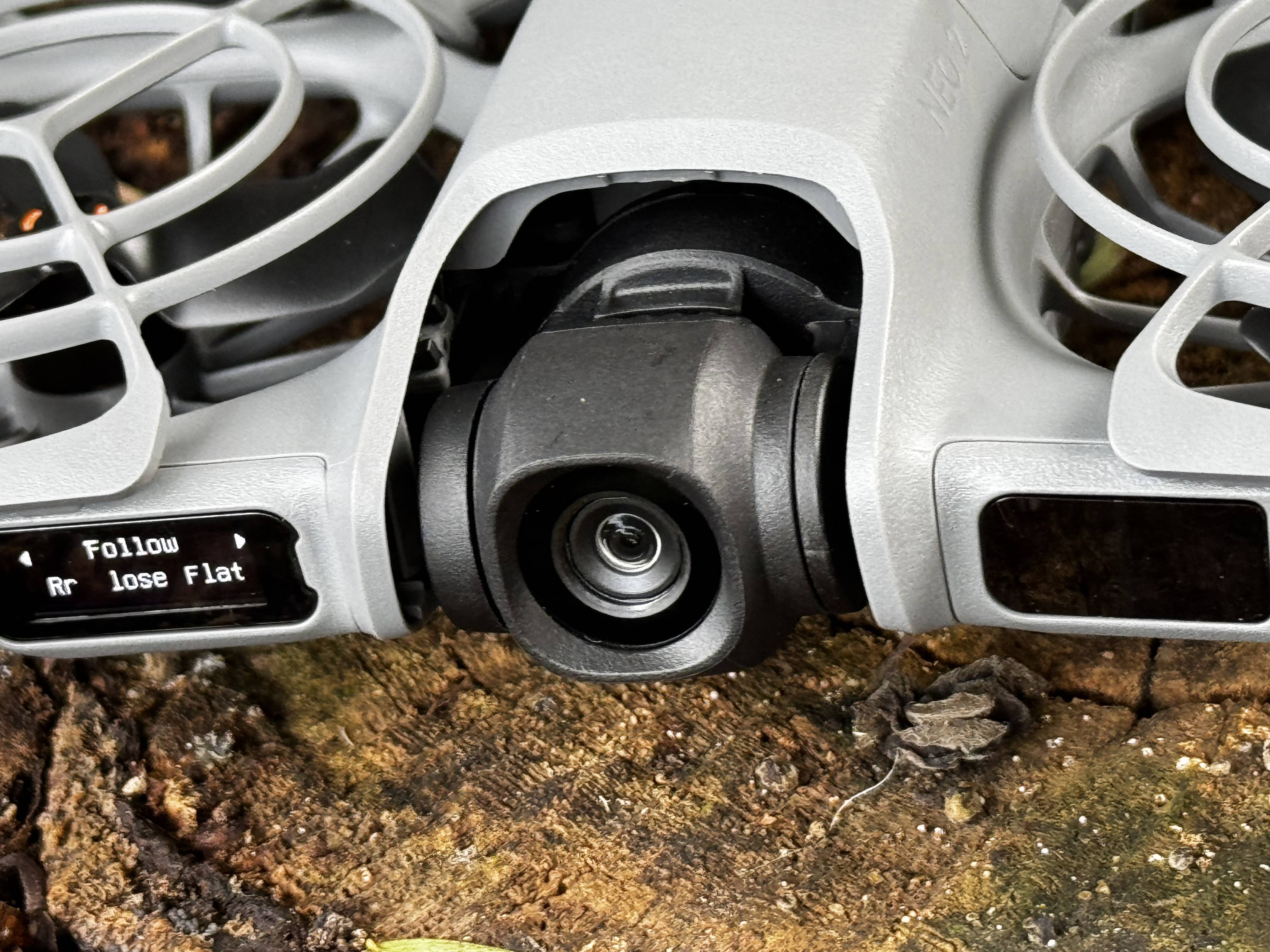
The overall design of the DJI Neo 2 remains familiar but DJI added several noticeable changes. The first one is the small display on the front left side. This screen shows the current flight mode whenever the drone is not connected to the controller. There are 3 buttons on the middle part of the drone which are the select, left, and right controls that help you navigate the screen. The drone also provides voice prompts that announce the mode you are switching to.
On the front right section is the forward-facing LiDAR sensor. The original DJI Neo only relied on downward vision and infrared positioning so it had no proper obstacle avoidance. The DJI Neo 2 finally adds safer flying capability by detecting objects in front of it. Next to the LiDAR sensor is a small indicator light that turns on when the drone is placed in SelfieShot mode.
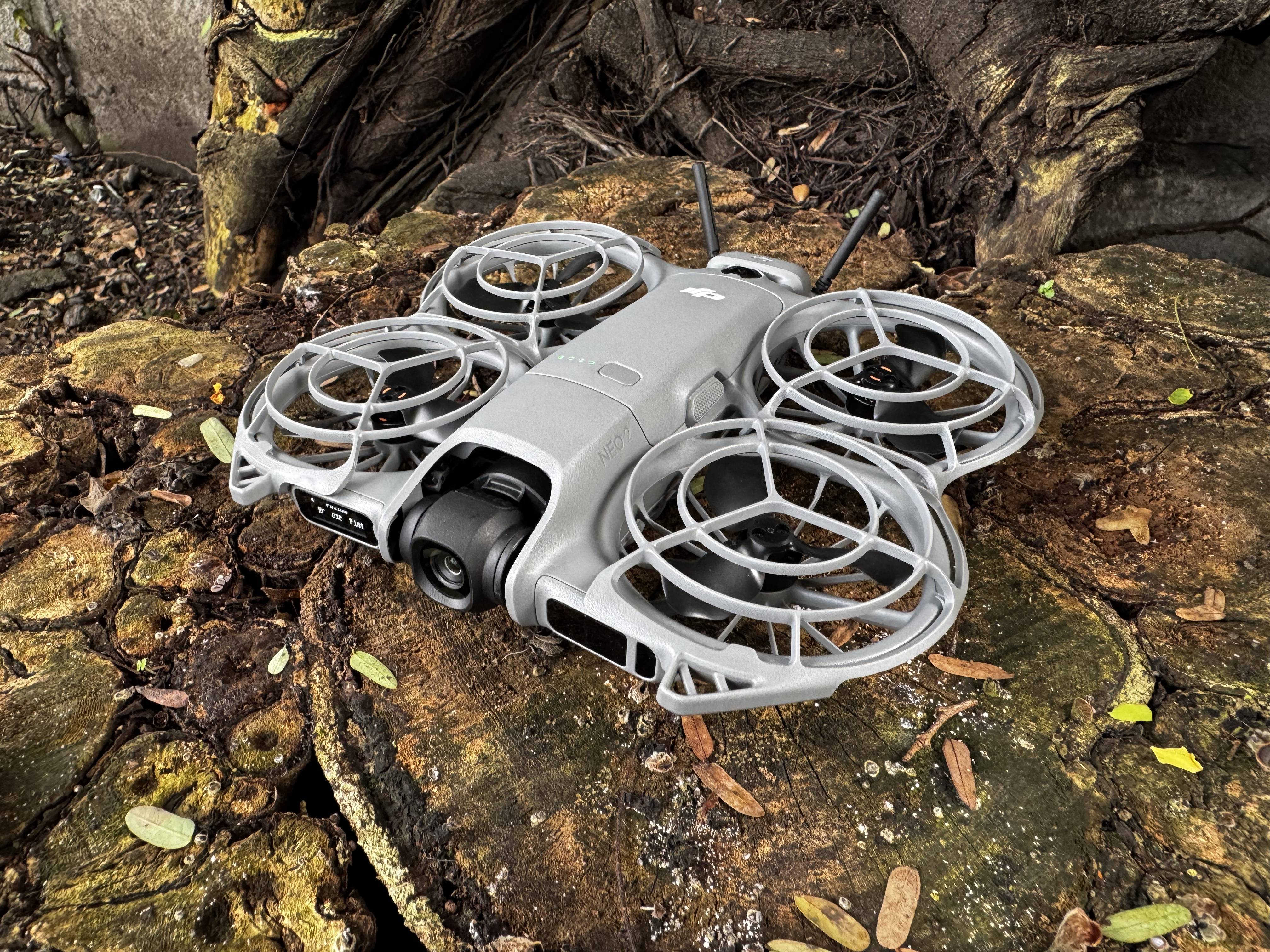
The DJI Neo 2 still has a built-in propeller guard which helps protect the drone and the propellers if it bumps into obstacles.
The Camera
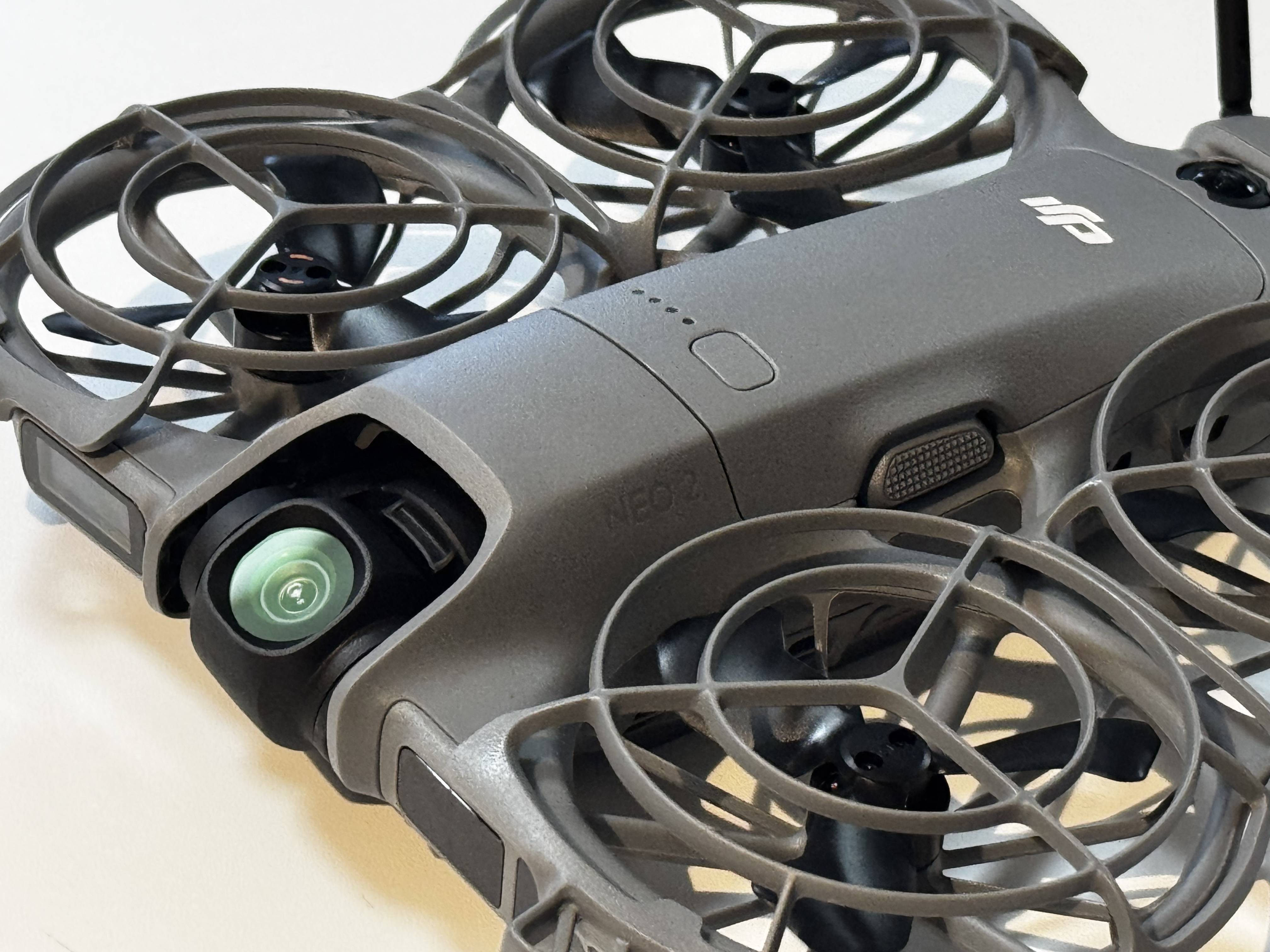
The DJI Neo 2 brings a major improvement to stabilization because it now uses a 2-axis gimbal. The previous DJI Neo only had a 1-axis gimbal, which made footage more prone to shakes. The upgraded stabilization instantly makes the video output smoother and more stable.
The aperture is also wider which helps a lot when shooting in low-light situations. The sensor remains the same at 1/2 inch with 12 megapixels, but DJI improved the image processing so the output looks cleaner and more natural.
DJI Neo 2 – Camera Image Sample//s.imgur.com/min/embed.js
Video capabilities are much stronger this time. The DJI Neo 2 records in 4K up to 60 frames per second and can shoot 4K 100 frames in certain slow-motion modes. Only 4K 30 frames per second was possible with the previous DJI Neo. The difference is evident in our sample videos. The footage from the DJI Neo 2 appears more detailed and crisper. Many users complained about the original model’s CCTV-like appearance, which is now better thanks to the new processor and wider aperture.
The Performance
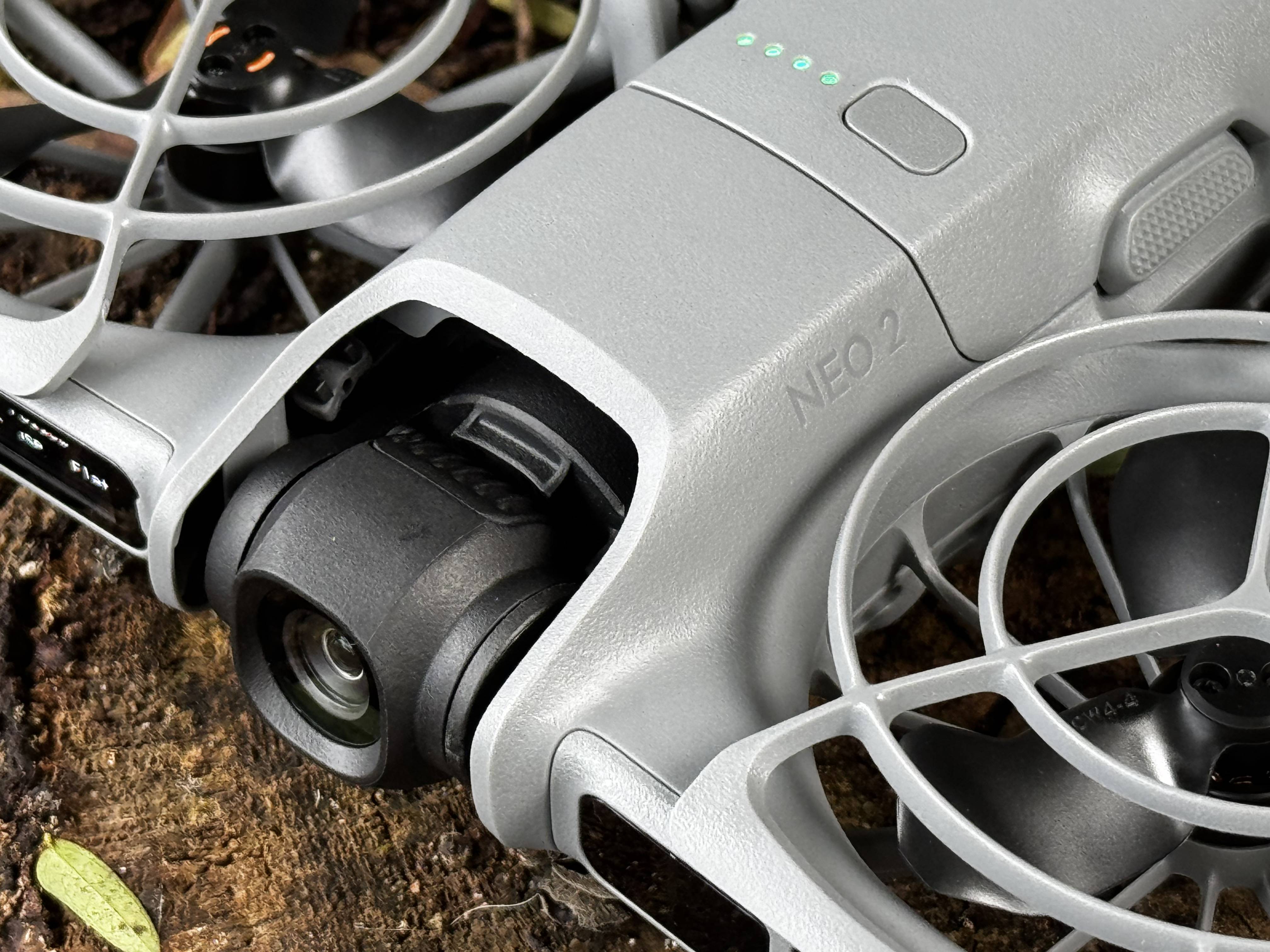
The DJI Neo 2 now has 49 GB of internal storage which is a large jump from the 22 GB of the first version. There is still no microSD slot but the bigger storage helps a lot when recording longer sessions.
WiFi connectivity has also improved, with a video transmission range of up to 500 m as opposed to just 50 m previously, and faster file transfer speeds.
Controls are more flexible. The DJI Neo 2 supports gesture control so you can move the drone using hand movements. This adds another way to operate the drone aside from the controller, the smartphone app and the intelligent shooting modes.
The weight remains very light at 151 g without the transceiver. It still qualifies for C0 certification under the rules of the European Union Aviation Safety Agency.
Tracking performance received a strong upgrade. The DJI Neo 2 can follow subjects at 12 m/s while the previous DJI Neo could only follow at 8 m/s. DJI also added a Cycling Follow Mode that works better for fast and dynamic movement. Wind resistance is rated at Level 5 which is an improvement from Level 4 on the original DJI Neo. During our test flights we still received wind warnings when reaching higher altitudes but the drone generally stayed stable.
The Battery
The DJI Neo 2 battery capacity increased from 1435 mAh to 1606 mAh. DJI lists the flight time at 19 minutes. This is only 1 minute longer than before. In real-world use, the DJI Neo 2 felt slightly more power hungry, which resulted in shorter flights compared to what we expected. This is likely due to the new sensors and stronger processing hardware. Despite this, the overall improvements in image quality and performance make the trade-off acceptable.
DJI Neo 2 Verdict
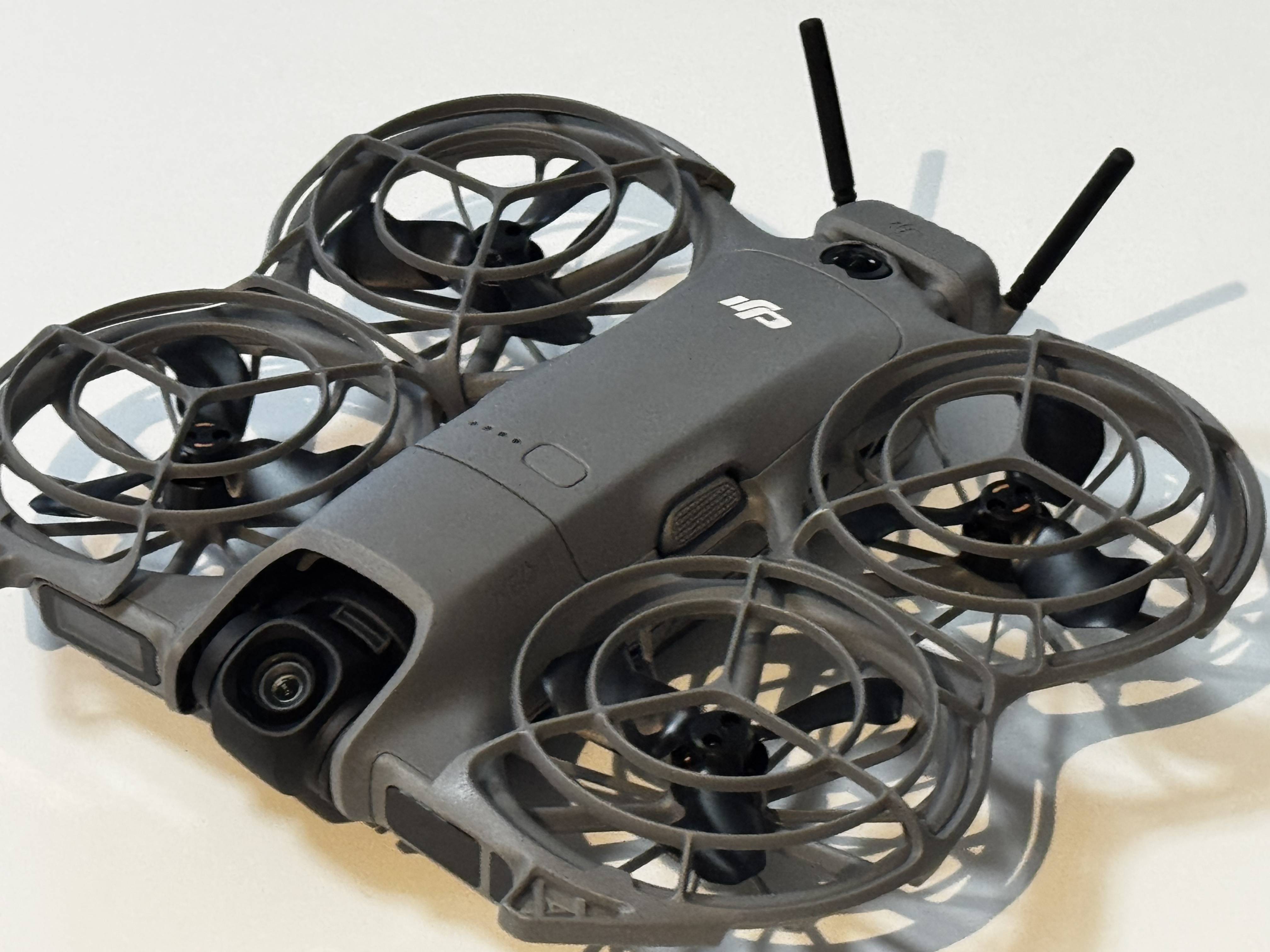
The DJI Neo 2 fixes almost all the weaknesses of the first model. The camera is better, the stabilization is stronger, the internal storage is bigger, the controls are more flexible and the added LiDAR sensor finally gives you safer flying. Even with the slight price increase the upgrade feels justified. If you are still deciding between the DJI Neo 1 and the DJI Neo 2, the DJI Neo 2 is the clear choice because it is better in every important area.
The DJI Neo 2 is priced at Php 12,390 for the standard drone. The Fly More Combo Drone Only costs Php 16,490, with the RC Controller priced at Php 20,590, and the Motion Fly More Combo at Php 30,490.